Edward Bernays: The Original Influencer
“The conscious and intelligent manipulation of the organized habits and opinions of the masses is an important element in democratic society. Those who manipulate this unseen mechanism of society constitute an invisible government which is the true ruling power of our country. We are governed, our minds are molded, our tastes formed, our ideas suggested, largely by men we have never heard of... in almost every act of our daily lives, whether in the sphere of politics or business, in our social conduct or our ethical thinking, we are dominated by the relatively small number of persons... who understand the mental processes and social patterns of the masses. It is they who pull the wires which control the public mind, who harness old social forces and contrive new ways to bind and guide the world.”
That’s a startling statement. It’s the opening statement for a book written back in 1928 called Propaganda. Most people would dismiss it as conspiracy theory. It certainly speaks of a conspiracy, but it’s no theory. In fact, the man who made the statement was instrumental in developing the very tools and tactics used by the “invisible government” to this very day. His name was Edward Bernays.
Edward Bernays is generally considered to be the father of modern advertising and public relations. He was also the nephew of one of the most important figures in modern history... Sigmund Freud. Freud made a profound impact on his nephew and was a major influence on his work. One of Freud’s most basic theories is that human beings are driven by invisible forces, and these motives and emotions are suppressed. Bernays understood that by tapping into those hidden forces, manipulation of individuals was not only possible, but inevitable, and they’d never even know it. Freud’s revolutionary insights into the human psyche form the very foundation of his nephew’s work. This makes Bernays one of the most influential figures of the modern age, easily the equal of his Uncle Sigmund. Bernays repackaged and rebranded the concept of propaganda as “public relations”. He understood that the engineering of content required strategic perception management.
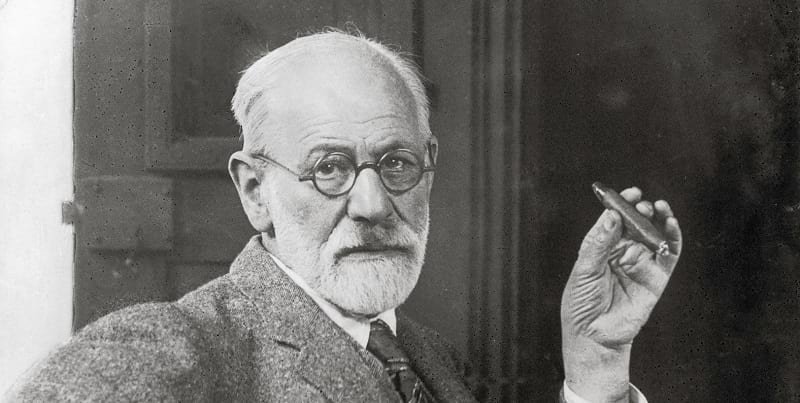
Uncle Sigmund Freud
One of Freud’s most important and revolutionary works was called Group Psychology and the Analysis of the Ego. It focused on how the behavior and emotions of individuals change once they enter into a group. Bernays was particularly interested in the psychology of groups. The insights in this book proved to be invaluable as it showed him the most effective way of manipulating the group without their knowledge.
Humans have a natural tendency to form groups. Early man formed tribes for purposes of survival and reproduction. The desire to form groups may well be instinctual. Uncle Sigmund understood that humans derive satisfaction and self importance by identifying with a particular group, particularly if the group is believed to be powerful. It was clear to Bernays that understanding the dynamics of group behavior was essential for constructing effective propaganda... oops.... effective promotional campaigns. It’s easy to understand why the work of Bernays quickly caught the attention of political and corporate leaders. The insights gained from group psychology could be used to create practical strategies for controlling society.
One of Uncle Sigmund’s most fascinating theories was that group psychology was distinctly different from individual psychology. This theory enabled Bernays to create successful strategies for group control and regimentation. Groups are not based upon physical proximity to others. It isn’t even necessary. In fact, a totally isolated individual can still be influenced by a group. A group is just a state of mind. As long as an individual identifies with a group, that individual is influenced by the group.

Understanding one’s suppressed motives and desires can be difficult, but it’s certainly possible via self introspection and analysis. Uncle Sigmund noted that group identification tended to thwart such introspection and analysis because the individual ends up being absorbed by the group... literally. Maintaining group harmony and cohesion is more important than introspection, analysis, and even the search for truth. Group psychology negates individual critical thinking. This is why groups are so easy to manipulate. As a result, groups are more susceptible to the techniques used to target their suppressed motives and desires. In other words, it’s far easier to manipulate a group than an individual.
Uncle Sigmund noted that, “The group is extraordinarily credulous and open to influence. It has no critical faculty.”
Unlike the individual, a group has no critical thinking skills. This works to the benefit of society’s controllers (both political and corporate), so they actively encourage group identification. They profit from it. A group is more prone to confrontation than introspection and rational discourse. A society separated into groups is a separated society... making it easier to control and manipulate. The controllers benefit from the inevitable clashing of groups because it keeps the participants too busy to notice the hidden hands at work. Manipulated groups are easy to divide and conquer, something Machiavelli well understood long before Bernays and Uncle Sigmund.
Group identification may well be instinctual, but is it healthy, particularly in the modern world? Uncle Sigmund certainly didn’t think so. He thought the natural inclination that individuals have for group identification should be overcome. He viewed individual consciousness as a step forward in human evolution. Whether or not Bernays agreed with that is unknown. What is known is that, as a result of his Uncle’s groundbreaking ideas, Eddie B. became the first genuine influencer of the modern age.